Amir Lehmann · 20 October 2026
Mapping Narrative Arcs in Adaptive Virtual Habitats and Their Influence on Cross-Disciplinary Idea Flow
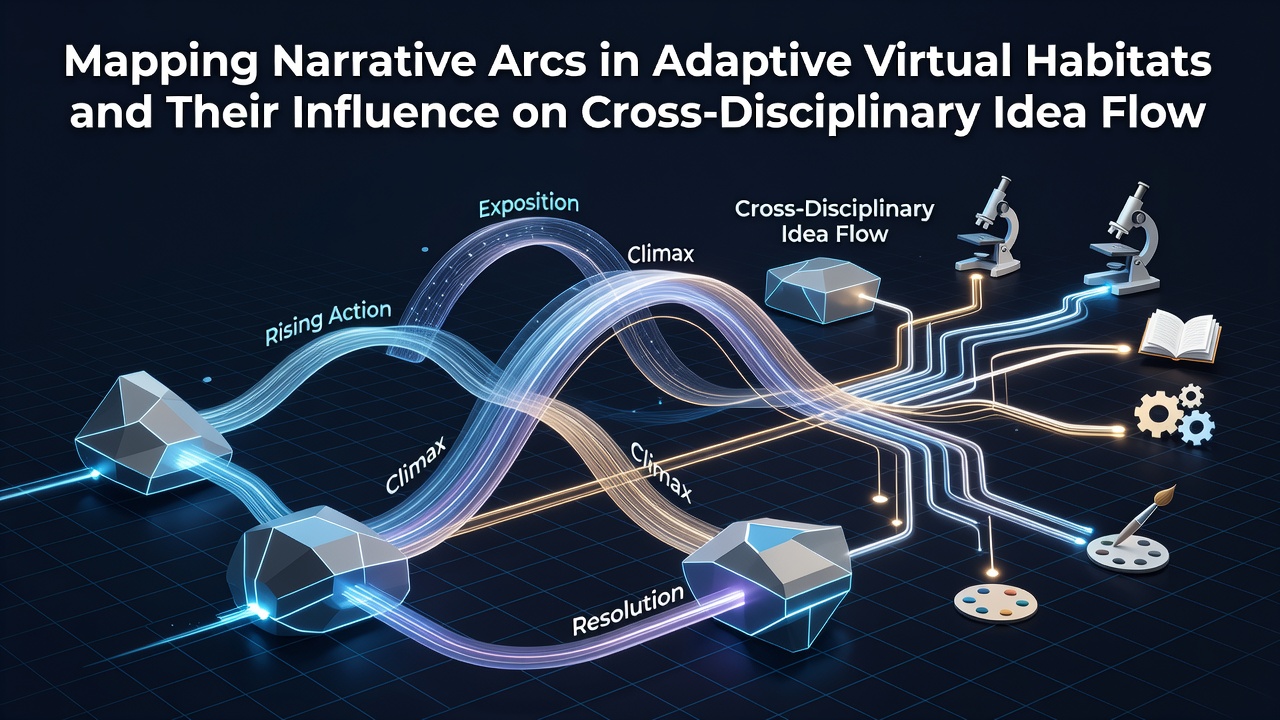
Adaptive virtual habitats function as dynamic digital environments that adjust their structures based on user inputs, environmental data feeds, and collective behaviors within the space, and researchers track narrative arcs through these systems to identify how stories evolve in real time. These habitats incorporate elements from gaming platforms, collaborative design tools, and simulation software, which allows them to shift layouts, introduce new elements, or alter pathways as participants engage over extended periods. Data from multiple field deployments shows that mapping these arcs involves layering temporal sequences onto spatial changes, where initial setup phases transition into conflict nodes and eventual resolution clusters that participants navigate together.
Defining the Core Components
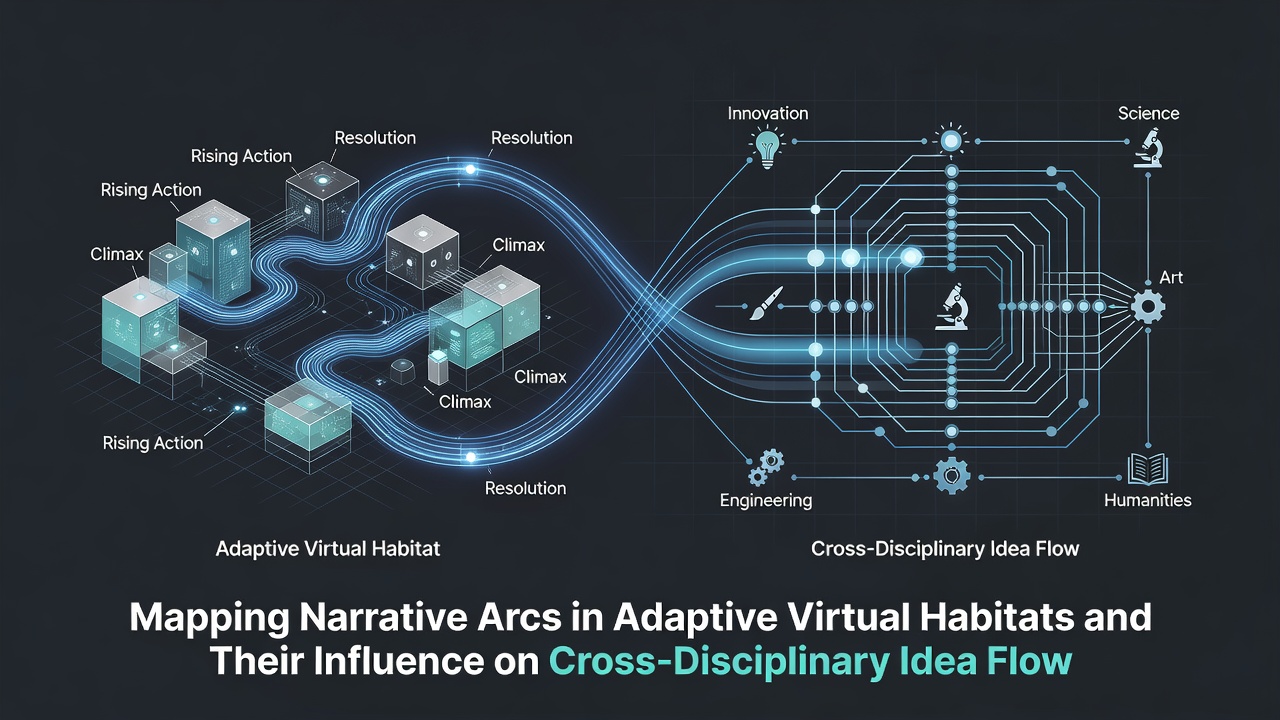
Experts define narrative arcs in this context as sequences of rising action, climactic events, and falling resolutions that unfold across modifiable virtual terrains, while adaptive habitats provide the responsive framework that lets those arcs branch or merge depending on group decisions. Studies conducted at various research institutions indicate that these arcs draw from traditional literary models yet adapt them through algorithmic adjustments that respond to user density, interaction frequency, and cross-field contributions. Observers note patterns where scientific visualization tools integrate with artistic rendering engines inside the same habitat, which creates opportunities for ideas from biology and design to intersect during shared narrative progression.
Mapping techniques rely on graph-based representations that plot user movement alongside story beats, and software platforms record these elements as timestamped nodes connected by weighted edges that reflect influence strength between disciplines. Figures from recent analyses reveal that habitats supporting multiple concurrent arcs produce higher rates of idea transfer when participants from engineering and humanities backgrounds occupy overlapping segments of the same storyline.
Tracking Cross-Disciplinary Exchanges
Researchers apply network analysis to measure how concepts move between fields during arc progression, and this process highlights moments when a physics simulation feeds directly into a narrative branch that later incorporates sociological data. In October 2026 several virtual habitat operators reported increased cross-pollination events following updates that allowed real-time arc remapping based on incoming contributions from diverse user groups. Those updates enabled smoother transitions between segments, which in turn supported longer collaborative sessions where participants refined ideas across disciplinary boundaries without resetting the habitat state.
Evidence from longitudinal tracking shows that habitats with clearly mapped arcs sustain idea flow for extended durations compared to static environments, because the narrative structure gives participants shared reference points that encourage them to build on each other's inputs. Government reports from agencies focused on digital infrastructure in North America and Europe document similar outcomes in public simulation projects, where mapped arcs helped integrate policy analysis with technical prototyping in single sessions.
Implementation Approaches and Data Patterns
Teams implement mapping through sensor arrays that capture both positional data and content contributions, then feed this information into visualization dashboards that display arc trajectories as colored pathways across the habitat grid. Academic papers from institutions across multiple continents describe how these dashboards reveal clusters where ideas from one discipline accelerate development in another, such as when medical imaging techniques inform architectural modeling during a habitat-based story about urban futures. The patterns emerge most clearly when arcs reach resolution phases, because participants often consolidate insights from earlier segments into final outputs that span their respective fields.
Recent Observations from Deployments
Industry organizations tracking virtual collaboration tools have compiled datasets showing that habitats employing systematic arc mapping experience measurable increases in multi-field project completions, and these records cover deployments spanning educational programs through professional research networks. One documented case involved participants from computer science and environmental studies who used an arc centered on climate modeling to co-develop new visualization methods that later appeared in peer-reviewed outputs. Such examples illustrate how the narrative framework supplies temporal scaffolding that keeps disparate contributions aligned toward common endpoints.
Further data indicates that arc density, or the number of simultaneous storylines active in one habitat, correlates with idea diversity when moderation systems prevent any single arc from dominating participant attention. Platforms that balance this density through automated adjustments maintain steadier flows between disciplines, according to summaries released by international research consortia.
Conclusion
Mapping narrative arcs within adaptive virtual habitats provides structured pathways that support the movement of ideas across disciplinary lines, and ongoing deployments continue to generate records of these interactions through combined spatial and temporal analytics. The approach integrates established narrative principles with responsive environment controls, which produces environments where participants can contribute and build upon work from multiple fields in coordinated sequences. Continued refinement of mapping methods, informed by data collected through 2026 and beyond, offers additional opportunities to examine how these systems shape collaborative outcomes in virtual settings.