
Rafael Wagner · 22 September 2026
Exploring Algorithmic Curation Effects on Content Discovery in Themed Virtual Gathering Platforms
Algorithmic curation shapes how users encounter content inside themed virtual gathering platforms, where digital spaces revolve around shared interests such as music sessions, creative workshops, and discussion circles. These systems analyze user behavior, past interactions, and session patterns to surface rooms, posts, and participants that match predicted preferences, and this process directly influences which conversations gain visibility while others remain hidden from view.
Platform operators deploy recommendation engines that track dwell time, click paths, and social connections, then adjust content feeds in real time. Researchers at institutions across North America and Europe have documented how these engines prioritize material that aligns with established user clusters, which can accelerate discovery of niche topics yet simultaneously reduce exposure to unrelated themes. Data collected from large-scale deployments indicate that engagement metrics rise when curation aligns closely with historical activity, although cross-theme exploration often declines under the same conditions.
Mechanics of Recommendation Systems in Themed Environments
Virtual gathering platforms employ collaborative filtering alongside content-based models to rank rooms adn posts, and these models draw from metadata such as theme tags, participant demographics, and temporal activity spikes. When a user enters a jazz-focused lounge, the system records the duration of stay and any messages exchanged, then compares that profile against thousands of similar sessions to suggest upcoming events. Observers note that weighting factors frequently emphasize recency and social proximity, which means content from frequent visitors or tightly connected groups surfaces more readily than material from newer or peripheral contributors.
September 2026 brings scheduled platform revisions that will introduce additional transparency layers for recommendation logic, according to announcements from several major providers. These changes follow regulatory guidance issued by bodies in the European Union and Canada that require clearer disclosure of ranking criteria in digital services. Implementation timelines show operators preparing to surface basic explanations of why certain rooms appear higher in feeds, a step intended to help users understand curation outcomes without altering the underlying algorithms themselves.
Observed Patterns in Content Visibility
Studies tracking user navigation across multiple themed environments reveal consistent patterns where high-engagement clusters receive disproportionate visibility. Participants who join popular sessions early in an event cycle tend to see continued recommendations within that same theme, whereas those who sample across categories encounter fewer suggestions that span boundaries. Figures from industry reports compiled by organizations such as the Interactive Digital Media Association illustrate that session retention improves when curation reinforces familiar pathways, yet aggregate diversity scores for discovered content drop over successive weeks of platform use.
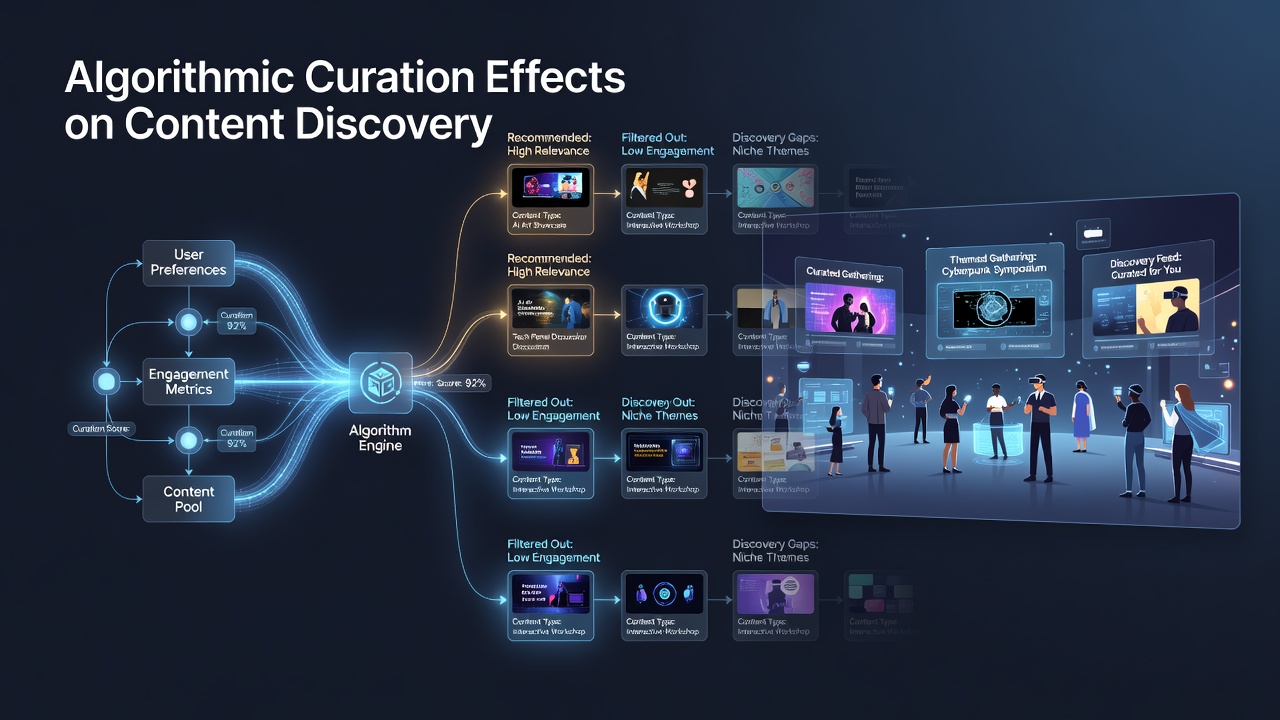
One documented case involved a creative writing platform where algorithmic adjustments reduced the promotion of experimental formats in favor of established genres. Usage logs demonstrated that writers working in less common styles received fewer room invitations, which in turn limited their ability to attract new readers. Similar dynamics appear in music and visual arts gatherings, where data from university-led analyses show that curation reinforces dominant sub-themes while marginal themes experience slower growth in participation.
Comparative Approaches Across Regions
Platforms operating under different regulatory frameworks demonstrate varying degrees of curation intensity. Services governed by Australian digital platform guidelines incorporate user-controlled sliders that allow temporary broadening of recommendation parameters, and early adoption metrics indicate modest increases in cross-theme discovery. In contrast, environments following North American industry standards rely more heavily on behavioral signals without explicit user overrides, producing tighter thematic groupings according to comparative studies released by academic research centers.
Trade associations representing virtual event organizers have published guidelines that encourage periodic audits of recommendation outputs to identify unintended concentration effects. These audits examine distribution across theme categories and flag instances where certain content types receive sustained under-exposure. Implementation remains voluntary in most jurisdictions, yet several large platforms have begun publishing summary statistics that track category balance over time.
Conclusion
Algorithmic curation continues to define discovery pathways within themed virtual gathering platforms, and ongoing regulatory developments scheduled for 2026 will introduce new requirements for explanation and user agency. Evidence from multiple regions shows measurable impacts on visibility and participation patterns, with engagement benefits appearing alongside reductions in thematic breadth. Continued monitoring through academic and industry channels will clarify how adjustments to these systems affect long-term content ecosystems.